
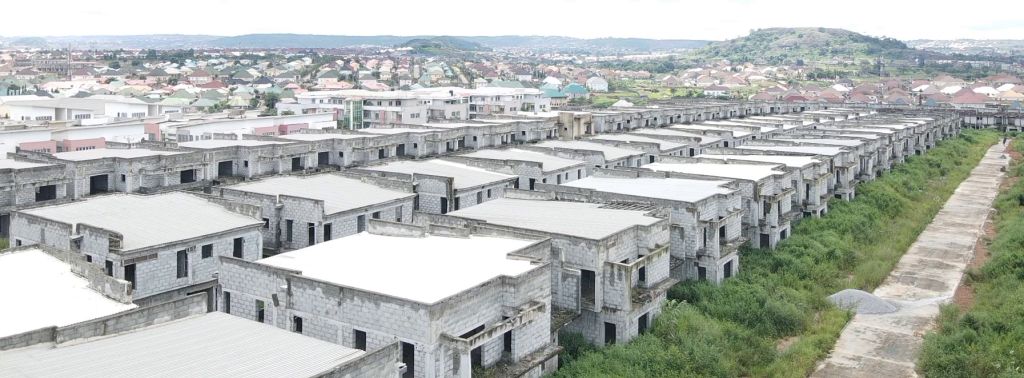
…Property measures 150,500 sqm with 753 housing units
…Milestone achievement in anti-corruption fight
The Economic and Financial Crimes Commission (EFCC) has achieved its largest asset recovery since its inception in 2003, following the final forfeiture of a massive estate in Abuja. The property, measuring 150,500 square meters and housing 753 duplexes and apartments, rests on Plot 109, Cadastral Zone C09, Lokogoma District.
Justice Jude Onwuegbuzie of the Federal High Court, Abuja, on Monday, December 2, 2024, ruled in favor of the EFCC’s application for the forfeiture of the estate. The property, linked to a former top government official currently under investigation, was deemed to have been acquired with proceeds of unlawful activities.
Delivering the judgment, Justice Onwuegbuzie stated:
“The respondent has not shown cause as to why he should not lose the property, which has been reasonably suspected to have been acquired with proceeds of unlawful activities. The property is hereby finally forfeited to the federal government.”
The ruling followed an interim forfeiture order issued on November 1, 2024, and represents a significant stride in the EFCC’s efforts to deprive suspects of proceeds from economic and financial crimes. The forfeiture was executed under Section 17 of the Advance Fee Fraud and Other Fraud Related Offences Act 2006 and Section 44(2)(b) of the 1999 Constitution.
EFCC Chairman, Mr. Ola Olukoyede, described asset recovery as a critical component in the fight against corruption and financial crimes. Addressing lawmakers recently, Olukoyede emphasized: “To recover one billion naira is war. The moment we start investigations, we simultaneously begin asset tracing because asset recovery is pivotal in the anti-corruption fight. If you allow the corrupt to access the proceeds of their crime, they will fight you with it.”
The recovery aligns with the EFCC Establishment Act, which empowers the commission to investigate and recover properties suspected to be disproportionate to an individual’s lawful income. Part 2, Section 7 of the Act states that the EFCC can investigate any person whose properties or lifestyle do not justify their source of income.
This process involves securing an interim forfeiture order, which is escalated to a final forfeiture once the court establishes a prima facie case. The EFCC followed this procedure meticulously in the Abuja estate recovery.
The estate’s recovery underscores the EFCC’s commitment to President Bola Ahmed Tinubu’s anti-corruption agenda. It also serves as a stark warning to public officials involved in corrupt practices.
The landmark achievement has drawn praise from stakeholders, with many viewing it as a turning point in Nigeria’s anti-corruption drive. Efforts to reach the former official implicated in the case for comments were unsuccessful as of press time.
The forfeiture sets a new benchmark in the EFCC’s asset recovery operations, reaffirming its resolve to dismantle financial crimes and uphold transparency in governance.
