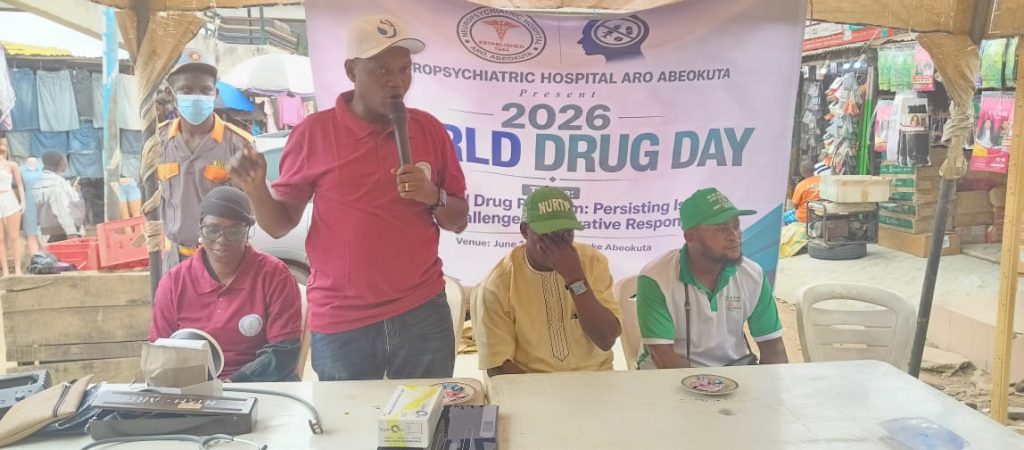
… Ogbebor urges drug users to seek treatment, warns addiction is curable
… Hospital links rising substance abuse to poor parenting, cheaper methamphetamine
Olayinka Akinpelu
Pastor Anthony Ogbebor, Chairman of the Planning Committee for the 2026 World Drug Day at the Neuropsychiatric Hospital, Aro, Abeokuta, has urged Nigerian mental health professionals to resist the growing wave of emigration and remain in the country to help combat the worsening drug abuse crisis.
Ogbebor said while professionals were highly sought after and better rewarded abroad, they had a responsibility to remain in Nigeria and support efforts to save lives from the devastating effects of drug addiction.
“Our citizens are our own people. Nigeria is the only nation we have, and we cannot leave our own home on fire and go to other places to quench their fire. They should make the sacrifice,” he said.
He also appealed to people using hard drugs to stop immediately and seek professional help, stressing that addiction is treatable if intervention comes early.
“My advice to those taking hard drugs is to stop. If it is already creating problems for them, they should seek help from professionals because it is curable. Those who have not started should not try it because treatment is expensive and takes a long time,” he said.
Ogbebor explained that substances including cigarettes, marijuana, cocaine, heroin, tramadol, codeine syrup and alcohol were highly addictive and could lead to severe health complications, including liver disease and mental illness.
His remarks came as the Neuropsychiatric Hospital, Aro, Abeokuta, raised fresh concerns over the growing drug abuse epidemic in Nigeria, describing it as a major public health challenge fuelled by poor parenting, the emergence of new psychoactive substances and the increasing availability of methamphetamine.
The Acting Provost of the hospital, Dr. Sunday Amosu, spoke during a road walk and awareness campaign held at Pamseke Market, Abeokuta, to commemorate the 2026 World Drug Day.
Amosu said efforts to curb substance abuse had produced limited results because interventions remained inadequate and families had failed to play their expected role.
“The problem is obvious. Whatever we are doing is like a drop in the ocean. There is a failure of parenting. Parents, schools, churches and government must all pay closer attention to our families,” he said.
He warned that traffickers and manufacturers of illicit drugs continued to introduce new substances into the market, making the fight against drug abuse increasingly difficult.
According to him, illegal laboratories now produce methamphetamine, popularly known as “ice”, in Nigeria, while the COVID-19 lockdown worsened the situation after supplies meant for export were diverted into the local market.
Amosu said the development reduced the street price of one gram of methamphetamine from about N10,000 to between N2,500 and N3,000, making the drug more affordable and accessible, particularly to young people.
Speaking on this year’s World Drug Day theme, he called for new strategies to address the emergence of newer psychoactive substances.
Also speaking, Dr. Grace Adeniyi warned that substance abuse damages the brain and other vital organs, listing memory loss, kidney and liver damage, lung complications, abnormal behaviour and mental health disorders among its consequences.
She advised people experiencing symptoms associated with substance abuse to seek prompt medical attention instead of self-medication.
Mrs. Ololade Oladunni encouraged Nigerians to adopt healthy eating habits, saying proper nutrition could improve wellbeing and reduce dependence on harmful substances.
A consultant psychiatrist at the hospital, Dr. Rukayat Akinde, said drug abuse remained a major cause of mental illness, insomnia, organ failure and some cancers.
She identified alcohol, cigarettes, cocaine, methamphetamine, petrol and the misuse of prescription medicines as commonly abused substances and urged Nigerians to prioritise prevention and seek professional help whenever addiction is suspected.
The awareness campaign drew community leaders, transport workers, market women and youths, who marched through Pamseke Market carrying placards with messages promoting a drug-free society.