
Adesakin Adefemi
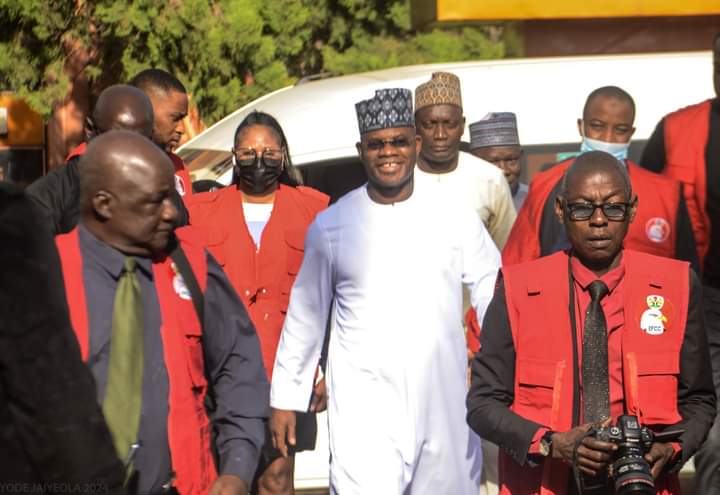
The Federal High Court in Abuja has remanded former Kogi State Governor, Yahaya Bello, in the custody of the Economic and Financial Crimes Commission (EFCC) until December 10, 2024.
This decision was made after Bello pleaded not guilty to the 16-count charge of money laundering brought against him by the EFCC.
The charges against Bello include allegations of misappropriation and money laundering, with the EFCC accusing him of acquiring properties worth millions of naira using state funds.
The properties include a house on Danube Street, Maitama District, Abuja, valued at N950 million, and another house on Justice Chukwudifu Oputa Street, Asokoro, Abuja, valued at N920 million.
Bello’s lawyer, Joseph Bodunde Dauda, had applied for bail, arguing that his client’s voluntary appearance in court demonstrated his respect for the law.
However, the EFCC opposed the bail application, citing Bello’s history of evading court appearances in another matter.
The EFCC also alleged that Bello had repeatedly refused to make himself available for trial, despite several efforts to secure his presence.
The commission argued that granting Bello bail would enable him to continue evading justice.
Justice Maryann Anenih adjourned the trial to December 10, directing that Bello remain in EFCC custody until the decision on his bail application is delivered.
The judge also dismissed the oral bail applications of Bello’s co-defendants, Abdulsalam Hudu and Umar Oricho.
The EFCC had initially filed 19 charges against Bello and his co-defendants for money laundering offenses amounting to N80,246,470,088.88.
In the fresh charges dated September 25, the total amount involved is N110,446,470,89.00.
Bello’s case is a significant development in the EFCC’s efforts to hold public officials accountable for their actions.
The commission has been working to root out corruption in Nigeria and ensure that those who abuse their positions of power are brought to justice.
The outcome of Bello’s trial will be closely watched, as it could set a precedent for future corruption cases involving public officials.
The EFCC’s efforts to hold public officials accountable for their actions have been widely praised, and many are hopeful that Bello’s case will mark a significant milestone in the fight against corruption in Nigeria.
The trial is a testament to the EFCC’s commitment to fighting corruption and ensuring that those who abuse their positions of power are held accountable.
As the trial continues, Nigerians will be watching closely to see how the case unfolds and whether justice will be served.
