
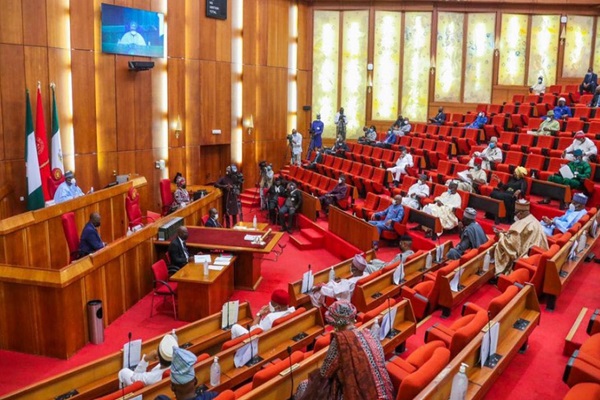
In a notable shift, the Senate on Thursday passed for second reading a bill aimed at establishing the South-South Development Commission (SSDC), just months after previously opposing it.
The bill, sponsored by Senator Asuquo Ekpenyong (APC – Cross River South), seeks to create a dedicated commission to address the developmental needs, ecological challenges, and infrastructural deficits of the South-South region.
Titled “A Bill for an Act to Establish South-South Development Commission,” the legislation proposes that the commission will be responsible for managing funds from the Federation Account Allocation, alongside donations, grants, and aid to tackle issues such as militancy, communal crises, and environmental degradation.
Ekpenyong, supported by all South-South Senators, including Senate President Godswill Akpabio, emphasized the importance of having a region-specific body.
He argued that the existing Niger Delta Development Commission (NDDC) does not adequately serve the South-South region because it includes non-South-South states such as Abia, Imo, and Ondo.
“The NDDC is a multi-regional body that includes states from other regions, making it less effective in addressing the peculiar challenges of the South-South,” Ekpenyong explained.
“We need a commission that is exclusively dedicated to our region, that understands our unique issues, and can craft tailored solutions.”
Ekpenyong also highlighted disparities in the allocation of resources under the NDDC, where states with higher oil production receive a larger share of funding, leaving others behind. The proposed SSDC, according to Ekpenyong, would ensure equal distribution of resources across all member states, regardless of their oil output.
“The South-South Development Commission will be funded on the principle of equality among member states, ensuring that every state—whether a top oil producer or not—receives its fair share of resources for development,” he added.
Supporting the bill, Senator Seriake Dickson (PDP – Bayelsa West) further argued that the NDDC was designed as a resource-based agency, addressing issues across oil-producing states. He noted that the South-South Development Commission would focus solely on the challenges faced by the South-South geopolitical zone.
“The NDDC cuts across multiple regions, unlike zonal-based commissions such as the proposed South-South Development Commission,” Dickson said. “We need a body that will focus exclusively on our region’s development and ecological problems.”
The bill also received bipartisan support from Senators across the political and geographical spectrum. Deputy Senate President Barau Jibrin backed the initiative and called for a name change for the NDDC, suggesting it be rebranded as a commission for “oil-bearing” or “resource-bearing” areas to include all oil-producing states in Nigeria.
“With the coming of the SSDC, the NDDC should be renamed to capture every community that produces oil, including states like Gombe, Bauchi, Kogi, Lagos, and Ogun,” Barau proposed.
Senate President Akpabio agreed with Barau, stating that any state that produces oil in commercial quantities in the future should automatically be part of the NDDC.
The bill was referred to the Senate Committee on Special Duties for further legislative work, with a directive to report back within one week.
In addition, the Senate passed amendments to the Northwest and Southeast Development Commission Acts, aimed at addressing gaps in the appointment process for the positions of Managing Director and Chairman, ensuring they are not appointed from the same state in each zone. The amendments also aim to promote federal character and ensure smooth functioning of the commissions across the zones.
Senate Leader Senator Opeyemi Bamidele (APC – Ekiti Central) led the debate on the amendments, stressing the importance of geo-political representation in the commissions’ governing boards.
“The amendments are necessary to provide for fair representation in line with the principles of federal character,” Bamidele explained.
Senate President Akpabio concluded by stressing the significance of these legislative changes, which he said were crucial for ensuring effective development in the various zones across the country.
