
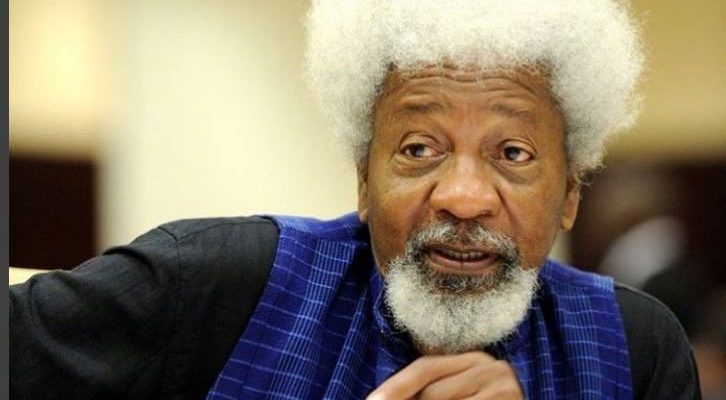
Nobel Laureate and renowned playwright, Prof. Wole Soyinka, has explained why he prefers traditional Orisa worship over Christianity and Islam.
According to him, the depth of faith in Christianity and Islam does not resonate with him as much as the traditional African religion of Orisa, which he finds more creative and non-violent.
In an interview with CNN’s Larry Madowo, Soyinka shared insights into his spiritual background, revealing that he was born into a family that practiced both Christianity and Orisa worship.
He described his fascination with Orisa as stemming from its openness, artistry, and ecumenical nature.
“I was fortunate to be born in two worlds – the Christian world and traditional Orisa worshippers. My grandfather, until he – poor man – also got converted, was an Orisa person and a chief, and his side of Orisa fascinated me a lot more,” Soyinka disclosed.
The literary icon highlighted Orisa worship as one of the African religions that promotes peace and shuns violence, which he found lacking in the Abrahamic religions.
“For me, it was more artistic, creative, and also more mysterious. I don’t find much of the mysterious in Christianity and even less in Islam,” he explained.
“Orisa is open, and very ecumenical, and that is why these foreign religions were able to penetrate it and even distort the truth. Because of the generosity of this spirit, it is not violent. It is one of those African religions which eschew violence.”
Soyinka further clarified his stance on religion, stating that he does not believe in the Christian or Islamic God, a position that may lead some to label him an atheist.
“I don’t believe in the Islamic or Christian God, and for the adherents of these religions, if that makes me an atheist, so I say, I am an atheist. But I insist that all human beings have a certain spiritual core in their being. I believe myself to be a more spirit-sensitive person.”
During the interview, Soyinka also expressed his discomfort with seeing his life or works adapted into films or other media, noting that it feels unsettling.
“Turning anything in my life into what other people can watch pains me. It makes me extremely uncomfortable. It’s wrong to say it’s terrific; let me just say I’m detached from it. It takes me a while to bring myself to watch me,” he admitted.
Soyinka’s revelations offer a rare glimpse into his personal beliefs and his connection to African spirituality.
