
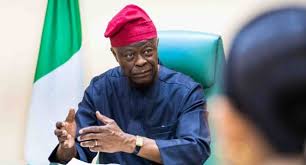
The Federal Government is implementing strategic reforms to de-dollarise Nigeria’s economy and enhance the value of the naira, according to Wale Edun, the Minister of Finance and Coordinating Minister for the Economy.
He made this statement during an investors’ parley held alongside the ongoing World Bank/IMF Annual Meetings in Washington, DC.
Edun highlighted Nigeria’s partial dollarisation, where the dollar is favored for international trade, finance, and as a store of value, due to persistent inflation and a weakening local currency.
To curb this trend, he stated that the government is encouraging businesses to invoice in naira instead of dollars, reducing domestic demand for the greenback.
“We are asking people to invoice in naira, thereby reducing the demand for dollars,” Edun explained, adding that efforts are being made to boost dollar inflows through increased oil production and open financial markets for diaspora investments.
He emphasized that the removal of petrol subsidies through market pricing from October 2 would be a significant financial relief for the country.
Central Bank of Nigeria (CBN) Governor Yemi Cardoso, in his remarks, reiterated the CBN’s commitment to market-driven policies, indicating more Open Market Operations (OMO) bills to stabilize the economy.
He also clarified that the CBN would not interfere in the NNPC’s dollar purchases from the open market.
Deputy Governor of Economic Policy at the CBN, Mohammed Sani-Abdullahi, outlined the government’s non-oil export earnings target of $10.3 billion and revealed that the country’s external reserves had reached $40.3 billion.
Sani-Abdullahi added that the goal is to let the naira find its natural level while reducing liquidity risks and enhancing public finance and tax administration.
The parley attracted major investors like Standard Chartered Bank, Goldman Sachs, and JP Morgan, among others, reflecting the government’s efforts to sustain Nigeria’s appeal to both local and foreign investors.
