
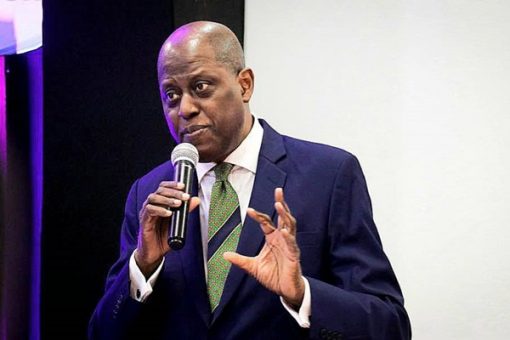
The Governor of the Central Bank of Nigeria (CBN), Olayemi Cardoso, reaffirmed the Federal Government’s commitment to using all available measures to curb rising inflation.
Speaking at the FT Africa Summit in London, Cardoso stated that the CBN is prepared to deploy “whatever tools at our disposal” to manage inflation effectively.
The remarks came after the National Bureau of Statistics (NBS) reported a spike in annual inflation, which accelerated to 32.7% in September—marking the first increase in three months.
The surge is attributed to soaring food and energy costs following the government’s decision to eliminate subsidies on petrol and electricity while allowing the naira to float freely.
While expressing optimism that headline inflation may moderate in the coming months, Cardoso acknowledged that food inflation remains a persistent challenge.
He emphasized the CBN’s close collaboration with the Federal Government to address the issue, which has strained household budgets in the country.
Cardoso highlighted the importance of maintaining momentum in Nigeria’s ongoing reform drive, pointing to growing interest from foreign investors.
He referenced recent visits by top executives like Citigroup CEO Jane Fraser and JPMorgan’s Jamie Dimon as evidence of increased confidence in the country’s economic direction.
“There’s an enormous amount of interest now, recognizing the fact that the Nigerian currency is relatively moderated and has made our economy a lot more competitive,” Cardoso remarked.
Since President Bola Tinubu assumed office, the naira has lost three-quarters of its value, while fuel prices have quintupled.
Despite these challenges, Cardoso noted that CBN’s measures to restore investor confidence were yielding results, with significantly fewer complaints about foreign exchange accessibility.
“Now, the market is a lot deeper… and it [forex] is available,” Cardoso assured.
He revealed that the country’s gross forex reserves now stand above $40 billion, and in a bid to promote transparency, the CBN plans to regularly disclose details of net reserves from early 2025.
Looking ahead, the CBN Governor projected moderate economic growth for next year, aligning with the World Bank’s forecast of around 3.6% for 2025, up from the expected 3.3% in 2024.
Cardoso expressed confidence that ongoing reforms would position Nigeria for improved economic growth.
“With the reforms that are being taken right now, it will put Nigeria in a far better position to see the increase on the growth side,” he concluded.
