
…Says Nigeria Loses 800 Newborns Daily, Unveils PAN Conference Plans
…PAN Flags SDG-3 Failure, Calls For Urgent Action
…Abeokuta Conference To Proffer Solutions
Paediatric Association of Nigeria (PAN) has linked the death of 800 infants daily in Nigeria to vaccine hesitancy, malnutrition and weak funding, describing the trend as a grave threat to the country’s development and a setback to global health targets.
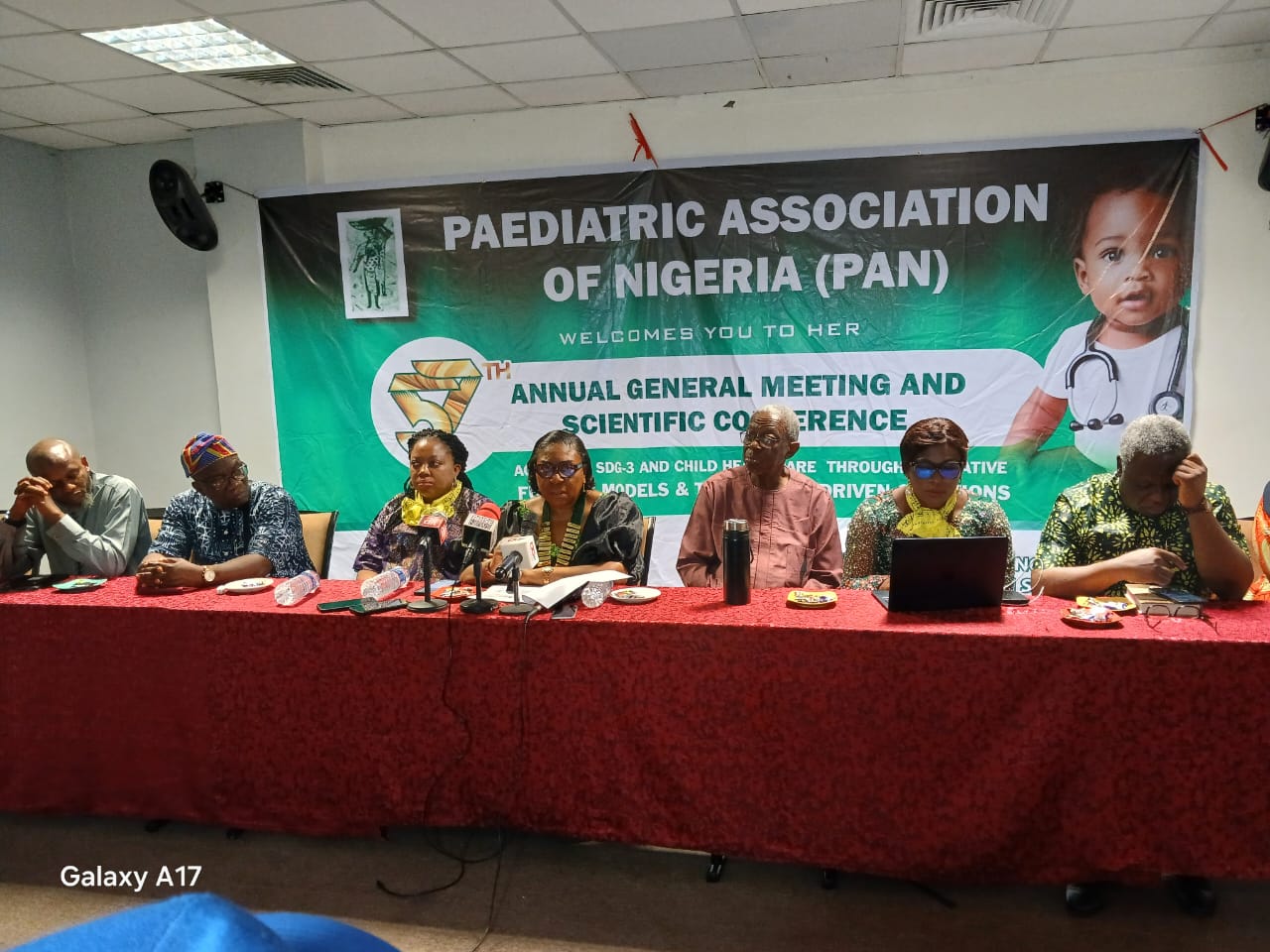
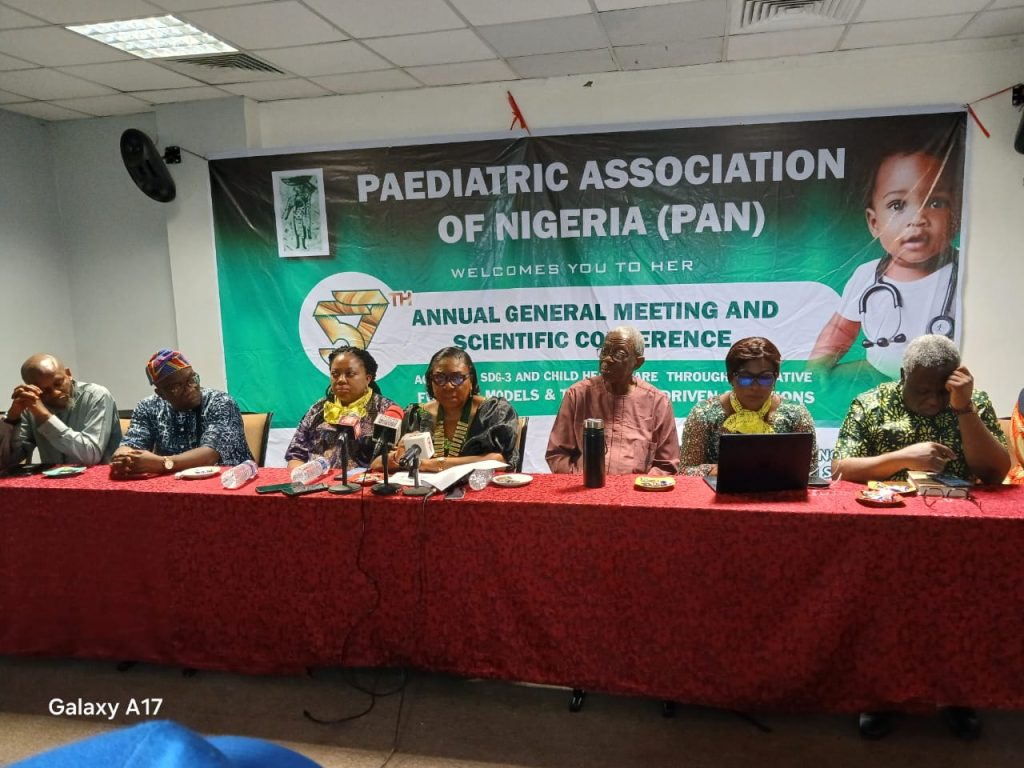
The President of PAN, Dr Ekanem Ekure, disclosed this at a press conference in Abeokuta, Ogun State, ahead of the association’s 57th Annual General Meeting and Scientific Conference, where child survival is expected to dominate discussions.
She said Nigeria was failing to meet Sustainable Development Goal 3 (SDG-3), particularly on neonatal and under-five survival, noting that urgent political, financial and technological interventions were required to reverse the trend.
“Our most recent national surveys show that neonatal mortality has not declined; instead, it has steadily increased. Children who survive the newborn period are still dying from malaria, pneumonia and diarrhoea — diseases the world already knows how to prevent and treat,” Ekure said.
She added that about half of child deaths in Nigeria are aggravated by malnutrition, stressing that undernourished children are more vulnerable to infections than their healthy counterparts.
Ekure attributed Nigeria’s high burden of preventable child deaths to vaccine hesitancy, misinformation, poverty, insecurity and weak health financing, warning that the resurgence of diseases such as measles in parts of the country reflected falling immunisation rates.
“Vaccines save lives. They have saved millions of lives globally and continue to do so. In my hospital, for over 10 years, none of my students has seen a case of measles on the wards. Yet in other parts of Nigeria, we still record outbreaks.
“The difference is immunisation,” she said.
She acknowledged that vaccines may cause mild side effects such as fever or pain at injection sites, but insisted that Nigeria had surveillance systems to monitor adverse events, including a reporting platform provided by NAFDAC.
“Public health decisions are based on overwhelming benefits against negligible risks. We cannot abandon life-saving vaccines because of misinformation,” Ekure added.
The PAN president urged journalists to counter false narratives around immunisation, describing the media as key partners in protecting children’s lives.
On nutrition and food security, she advised parents to prioritise exclusive breastfeeding for the first six months of life and to rely more on locally sourced foods.
“Breastfeeding is the foundation of child nutrition. Babies need nothing else for the first six months. We also have rich local foods across Nigeria. Let us cook what we grow. Home gardening can make a real difference,” she said.
Ekure also called for increased investment in local vaccine production, warning that Nigeria’s dependence on donor-supported vaccines through agencies such as Gavi was not sustainable.
“There is a timeline when these partners will pull out. How prepared are we? Local vaccine production will reduce costs, create jobs, strengthen our economy and secure our children’s future,” she said.
She said these issues would form the focus of PAN’s 57th Annual General Meeting and Scientific Conference, tagged PANConf Gateway 2026, scheduled to hold in Abeokuta from 21 to 23 January 2026.
The theme of the conference, “Achieving SDG-3 and Child Health Care through Innovative Funding Models and Technology-Driven Solutions,” will bring together paediatricians, policymakers, researchers, development partners, media professionals and technology experts to develop practical responses to Nigeria’s child health challenges.
Sub-themes include sustainable child health financing, digital health solutions, emerging and re-emerging infectious diseases, local vaccine manufacturing and the role of the media in advancing child survival.
Ekure said PAN had strengthened its governance structures and expanded advocacy over the last two years, including training immunisation champions nationwide to combat vaccine misinformation.
However, she warned that professional efforts would be insufficient without strong political commitment and sustainable financing.
“The future of Nigeria is inseparable from the health of its children. This conference is not just another meeting; it is a call for accelerated action, smarter financing and innovative solutions to ensure that no Nigerian child is left behind,” she said.
She urged governments at all levels to prioritise child-focused programmes, called on the private sector and development partners to invest in accountable child health initiatives, and tasked the media with sustaining evidence-based reporting on child survival and wellbeing.
