
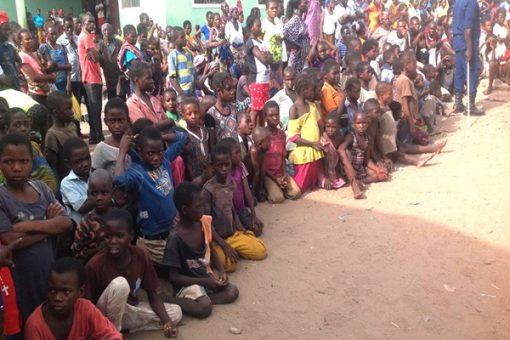
The European Union (EU) has introduced a new educational support initiative, the Accelerating Basic Education and Livelihood Opportunities (ABEP) for Children and Youth, aimed at improving access to quality education for out-of-school children and nomadic populations in Nigeria’s northwest region.
The three-year program, launched in Dutse, Jigawa State, will be implemented in collaboration with Save the Children International, PLAN International, and Development Alternatives Group (DAG), targeting Jigawa, Kano, and Sokoto states.
At a project kick-off workshop, Tobi Ransomed, the Consortium Team Lead, shared that the ABEP initiative seeks to reach around 400,000 children, youth, and other vulnerable groups, including women and girls, in a drive to create inclusive and conflict-sensitive education.
“Part of our activities will involve training master trainers and learning facilitators in the accelerated basic education programme across identified local government areas,” she said.
The program will begin by working with the State Universal Basic Education Board (SUBEB) and the Nomadic Education Commission to identify learning facilitators and centers, aiming to reintegrate out-of-school children back into the educational system.
Jigawa State Governor Umar Namadi, represented by Deputy Governor Aminu Usman, expressed the state’s support for the EU-backed initiative.
He emphasized the alignment of ABEP with his administration’s objective of reducing the number of out-of-school children in the region. “This project offers a path to improving the future of many of our children,” Usman noted.
Stephen Sawa, the state team lead for Jigawa from Save the Children, emphasized the global nature of the out-of-school crisis, with Nigeria representing 10% of the world’s statistics on out-of-school children, according to UNESCO.
“The number of out-of-school children in Jigawa alone exceeds 700,000, a figure that is alarming,” Sawa said, adding that without intervention, this issue could hinder national development.
The ABEP program will focus on enhancing literacy, basic numeracy, and skills acquisition to improve employability and self-reliance among children.
“In addition to literacy, the programme includes skills acquisition, focusing on employable job opportunities aligned with societal needs,” Sawa explained.
“Education increases a person’s livelihood prospects by up to 10 percent, and we aim to create a productive population.”
The EU initiative is anticipated to not only decrease the out-of-school population but also reduce poverty and contribute to a more economically vibrant Nigeria.
(NAN)
