
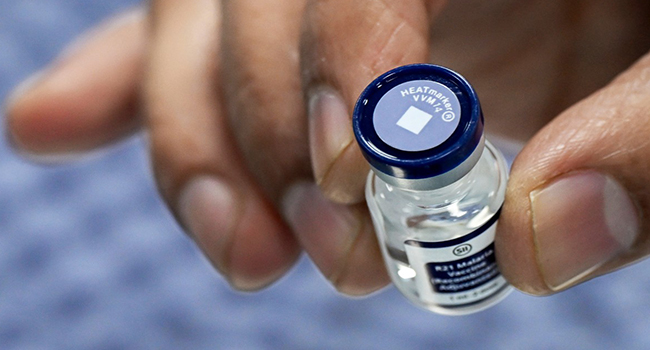
The Federal Government has announced the integration of the malaria vaccine into Nigeria’s national routine immunization schedule, marking a critical step toward eliminating one of the country’s deadliest diseases.
The decision, unveiled during the inaugural meeting of the Advisory on Malaria Elimination in Nigeria (AMEN) held in Abuja, highlights the government’s resolve to combat malaria, which costs the nation over $1.1 billion annually and claims thousands of lives.
Professor Muhammad Ali Pate, the Coordinating Minister for Health and Social Welfare, described malaria as a pressing health, economic, and developmental crisis. “Malaria continues to exert an unacceptable toll on Nigeria,” he said.
“With 27% of global malaria cases and 31% of global malaria deaths, our country bears the heaviest burden of this disease. In 2022 alone, over 180,000 Nigerian children under the age of five lost their lives to malaria — a tragedy we have the tools to prevent.”
Prof. Pate emphasized the economic toll of malaria, noting its impact on productivity, increased healthcare costs, and poverty levels. “This is not just a health crisis; it is an economic and developmental emergency,” he said. “The annual loss to Nigeria’s GDP from malaria exceeds $1.1 billion, underscoring the urgent need for elimination.”
Vaccine Rollout Begins
The National Primary Health Care Development Agency (NPHCDA) confirmed that the malaria vaccine, R21/Matrix-M, will be rolled out in phases, beginning with Kebbi and Bayelsa states.
Developed by scientists at Oxford University and manufactured by the Serum Institute of India and Novavax, the vaccine will be administered to children aged five to 15 months as part of the routine immunization schedule.
Dr. Muyi Aina, Executive Director of the NPHCDA, explained the rollout strategy: “The introduction will be expanded to other states and integrated into our national routine immunization schedule as we receive additional doses. The second phase will target 19 states and the FCT, while the third phase will cover the remaining 15 states by 2025.”
In October, Nigeria received its first consignment of one million doses of the R21 vaccine, donated by Gavi, the Vaccine Alliance, with support from UNICEF and the World Health Organization (WHO). Nigeria is among the first countries in the world to adopt the vaccine, offering hope for a significant reduction in malaria-related deaths.
A Critical Step Toward Malaria-Free Nigeria
Malaria remains a leading cause of death among children under five in Nigeria, with the country accounting for 27% of the global malaria burden. The introduction of the R21 vaccine is expected to protect millions of children and move the nation closer to a malaria-free future.
“This is a monumental step for Nigeria,” said Prof. Pate. “Malaria elimination is a critical component of the Nigeria Health Sector Renewal Investment Initiative and aligns with the Renewed Hope Agenda of the current administration. We are committed to transforming our health sector and saving lives.”
With the rollout underway, the government and health partners hope the malaria vaccine will serve as a turning point in the fight against the disease, bringing relief to countless families and strengthening the nation’s health infrastructure.
