
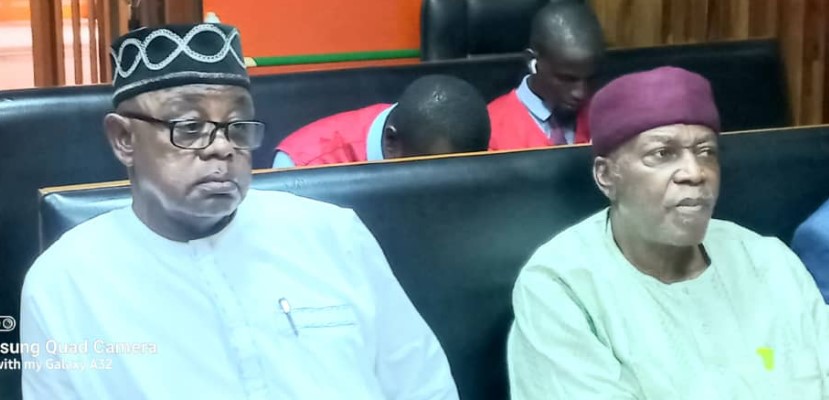
Former Taraba Gov Ishaku remanded in EFCC custody over alleged N27bn fraud
A Federal Capital Territory (FCT) High Court in Maitama, Abuja, on Monday, remanded former Taraba State Governor, Darius Ishaku, and the former Permanent Secretary of the Bureau for Local Government and Chieftaincy Affairs, Bello Yero, in the custody of the Economic and Financial Crimes Commission (EFCC).
The two were arrested on September 27 over allegations of diverting ₦27 billion belonging to the Bureau for Local Government and Chieftaincy Affairs.
In the suit, marked CR/792/24, the EFCC accused the defendants of diverting ₦1,010,000,000 for personal use between August 2015 and March 2016. The agency stated that this sum was part of the 2.5 percent contingency funds allocated to the Bureau.
According to the EFCC, the alleged offense contravenes Section 315 of the Penal Code A, Cap 532, Laws of the Federal Capital Territory of Nigeria, 2007. The agency further detailed additional sums allegedly siphoned by the duo, including ₦650,686,369.99 and ₦193,030,000 between January 2019 and April 2021, as well as ₦170,549,842 during the same period.
Upon their arraignment, both Ishaku and Yero pleaded not guilty to the charges. The EFCC’s spokesperson, Dele Oyewale, confirmed that the prosecution counsel, Rotimi Jacobs (SAN), requested a trial date and urged the court to expedite the hearing.
However, Paul Haris Ogbole (SAN) and Oluwa Damilola Kayode, representing Ishaku and Yero respectively, submitted oral bail applications, which Jacobs opposed, calling for formal applications instead.
Justice S. C. Iji adjourned the case until Thursday, October 3, for the hearing of the bail applications. He ordered that the former governor and the permanent secretary remain in the custody of the EFCC until the next court session.
The case has drawn significant public attention due to the high-profile nature of the accused and the staggering amounts of money allegedly misappropriated. The EFCC has assured the public that justice will be pursued swiftly and in accordance with the law.
