
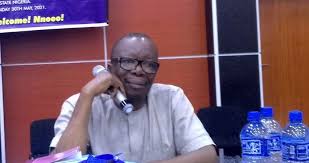
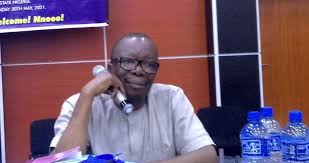
The President of the Academic Staff Union of Universities (ASUU), Professor Emmanuel Osodeke, has raised alarm over the looming shutdown of several Nigerian universities due to the rising costs of electricity, which have become unbearable.
Speaking at the opening of a two-day national conference in Abuja on Thursday, themed “Nigeria in a State of General Crisis: The Search for a New Path to Development,” Osodeke highlighted the immense financial burden that public universities are facing.
According to Prof. Osodeke, the federal government allocates only N15 million monthly for the running costs of universities, a figure grossly inadequate when compared to the electricity bills, which range from N200 million to N300 million for some institutions.
“One of the universities today is closing down because they have been given an electricity bill of N300 million,” Osodeke lamented.
“What the government gives you to run the system is N15 million, and you get a bill for electricity alone of N300 million. Where is that money coming from? You have to run the laboratories, diesel, and fuel for vehicles. That is where the internally generated revenue (IGR) is going today.”
He criticized the federal government’s handling of the situation, emphasizing that funds meant for academic development, including the purchase of books for libraries, are being diverted to cover operational costs.
He further noted that the situation reflects misplaced priorities in the country, highlighting that while universities receive N15 million, individual senators receive N21 million monthly.
“For whatever reason, they have refused to fund the university systems as it was in the earlier part of our history,” Osodeke said. “If nothing is done, many universities will close up because they cannot afford the so-called Band A and Band B electricity classifications.”
Prof. Osodeke also shed light on the hardship faced by lecturers, noting that many academics are leaving the profession for more lucrative ventures, such as farming, as a result of low wages.
“A professor earns less than N300,000 per month, which is not enough to cater for his family or fund research publications. Many lecturers are leaving the country in search of greener pastures, and the few remaining are struggling to keep the institutions running.”
In addition to the electricity crisis, Osodeke expressed concerns about Nigeria’s electoral processes, pointing out that rigging is rampant at polling units and local government collation centers. He called for ASUU members to be involved in the electoral process from the grassroots level to ensure transparency.
“If ASUU members are involved from the polling unit level to the national collation, rigging can be significantly reduced,” he stated. “But until then, ASUU will not participate in elections as an official body.”
The acting Executive Secretary of the National Universities Commission, Chris Maiyaki, also addressed the conference, charging university lecturers to spearhead the search for solutions to Nigeria’s challenges.
“There is no class of persons more qualified than members of the Academic Staff Union of Universities in the urgent task of searching for solutions to the current predicament of Nigeria and Nigerians,” he said.
Maiyaki emphasized the need for a multi-stakeholder approach, asserting that academics should lead the conversation for a sustainable future for the country.
Similarly, the President of the Nigeria Labour Congress (NLC), Joe Ajaero, added his voice, criticizing the Nigerian government for neglecting the education sector and failing to fulfill agreements with organized labour.
Ajaero called on university-based unions to unite and declare a national action to force the government to reposition the sector.
“When they [leaders] go abroad for medical treatment, they come back with neoliberal policies and impose them on us,” Ajaero said, condemning the government’s reliance on foreign institutions for loans and financial assistance.
As Nigerian universities continue to grapple with the escalating electricity bills and chronic underfunding, the future of public education in the country hangs in the balance.
The ASUU conference has drawn attention to the urgent need for the government to rethink its policies and prioritize education as a critical sector for national development.
